Thermal Assemblies, Components & Accessories

Analog Technologies supplies the thermal hardware that sits around a temperature-control loop — the heating and cooling assemblies that move the heat, and the accessories that couple, insulate and dissipate it. These parts are chosen after the control electronics: pair them with an ATI TEC controller, a TEC (Peltier) module and an NTC thermistor to close the loop.
Everything below is stocked or built to order from San Jose, California. Datasheets and live stock figures are shown with each part.

Which thermal component do I need?

Design requirement Recommended product Key specs
Cool an enclosure or cabinet without refrigerantTEC Air Conditioner195 W cooling, ΔT 40°C, 24 VDC / 13.2 A
Move higher heat loads with a ready-made cold plateTEC AssemblyCOP 0.56, 8 A DC max input
Heat a small area quickly and preciselyMetal Ceramic Fusion Heater96% Al2O3, 0.8–3.0 mm thick, 3.7–5 V
Bench-test a TEC controller before committing to a designTemperature Plate Assembly−20°C to 110°C, 15.75 W load, 1.8 mV stability
Route wiring through a hot or chemically harsh zoneHigh Temperature Plastic Tubing−234°C to 260°C, UL 94 V-0
Shed waste heat from the hot side of a TECHeat SinkBlack-anodized aluminium, 0 or 4 mounting holes
Close the air gap between a TEC and its heat sinkThermal Conductive Material1.5 W/m·K (ATCR1R5 pad)
Recover electricity from a temperature differenceThermoelectric Generator (TEG)Seebeck effect, output scales with ΔT (under development)

Two points engineers ask about most: a thermoelectric assembly moves heat, it does not destroy it — the hot side still needs somewhere to dump roughly the cooling power plus the electrical input, which is what the heat sink and thermal pad are for. And COP below 1 is normal for thermoelectric cooling; you trade efficiency for no moving parts, no refrigerant, and precise bidirectional control.

Click to View

Metal Ceramic Fusion Heater (MCH) — a high-melting-point metal paste (tungsten or molybdenum–manganese) is screen-printed onto a 96% alumina green body, laminated by hot pressing, then co-fired with the ceramic substrate at 1650°C in a hydrogen reduction atmosphere. The result is a heating circuit fused inside the ceramic rather than bonded to it: silent in operation, corrosion resistant, and tolerant of repeated cold/heat shock. MCH is used to replace alloy-wire and PTC heating elements. Substrate: white multi-layer 96% Al2O3, density >3.75 g/cm3, warpage <0.1 mm, bending strength >270 MPa. Standard sizes: circular Φ30 mm or Φ19 mm; rectangular 70×30 mm, 83×50 mm, 70×15 mm; thickness 0.8–3.0 mm. Electrical: working voltage 3.7 V / 4.5 V / 5 V typical; cold resistance 0.1–2000 Ω at 25±1°C, specified per voltage, chip size and power. RoHS compliant. Custom shapes, thicknesses and power ratings available.

Click to View

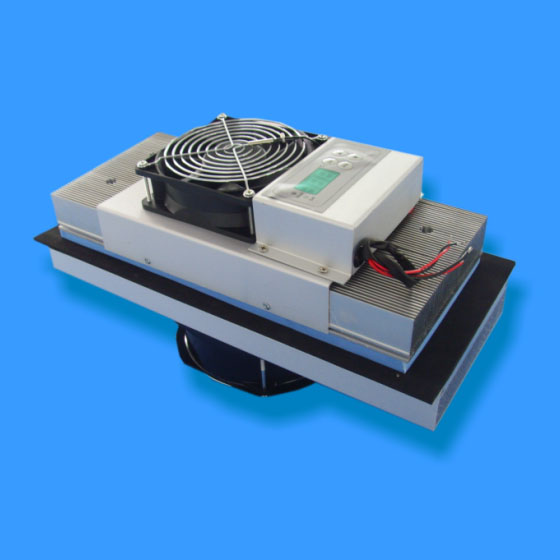
ATTECA200WC is a sealed thermoelectric (Peltier) air conditioner for cabinets and enclosures — solid-state cooling with no compressor, no refrigerant and no Freon, so there is nothing to leak or service. Performance: 195 W thermal cooling power, temperature difference up to 40°C. Power: 24 VDC input, 13.2 A maximum input current. Environment: operating temperature −10°C to +70°C, IP56 waterproof rating, weight 7.1 kg. Service life: 30,000–50,000 hours. 100% lead (Pb)-free and RoHS compliant. Because cooling is reversible with current direction, the same unit can heat as well as cool.

Click to View

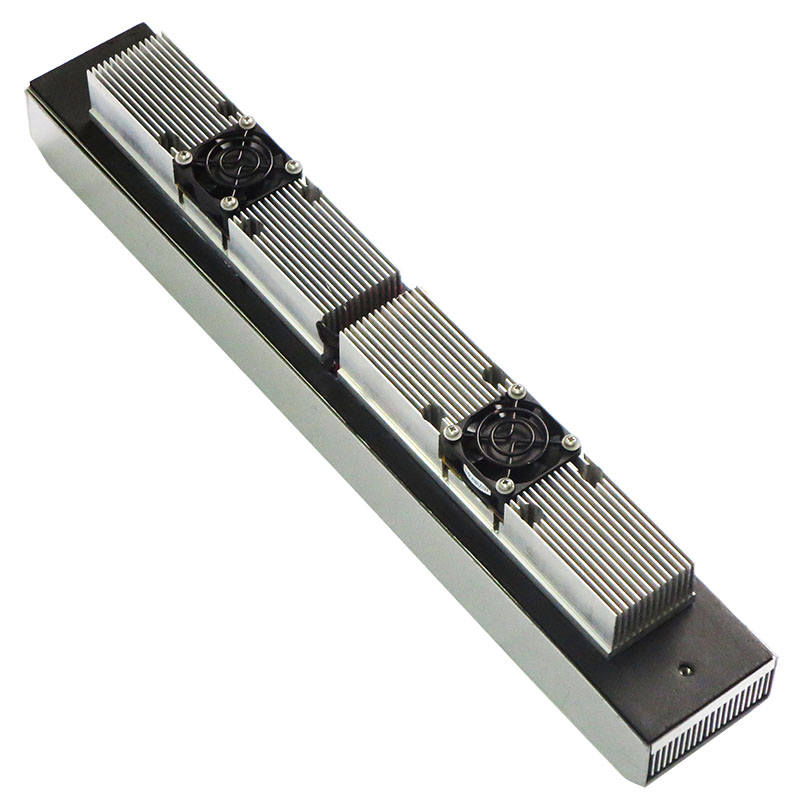
A ready-built thermoelectric cold-plate assembly — TEC modules, heat sink and fan pre-integrated, so the mechanical interface, clamping pressure and hot-side path are already engineered. Coefficient of performance: COP = 0.56. Maximum input current: 8 A DC. ATI is the OEM for MDKS\FITHCO, Inc. on this product; orders can be placed directly through this website. Use a TEC assembly instead of a bare TEC module when you want to skip the thermal-mechanical design work; drive it with an ATI TEC controller and an NTC thermistor to close the temperature loop.

High Performance Thermoelectric Generator TEG

Thermoelectric generators (TEGs) are solid-state devices that convert a temperature difference directly into electricity via the Seebeck effect — also called Peltier generators, TE generators or Seebeck generators. They are the thermodynamic inverse of a TEC: instead of consuming current to move heat, they produce current from heat already flowing across them. Output power scales with the temperature difference across the module, so performance is governed by how much ΔT the hot and cold sides can sustain in the real assembly. No moving parts, no working fluid, no maintenance. This product line is under development — contact ATI for current status and sample availability.

Click to View

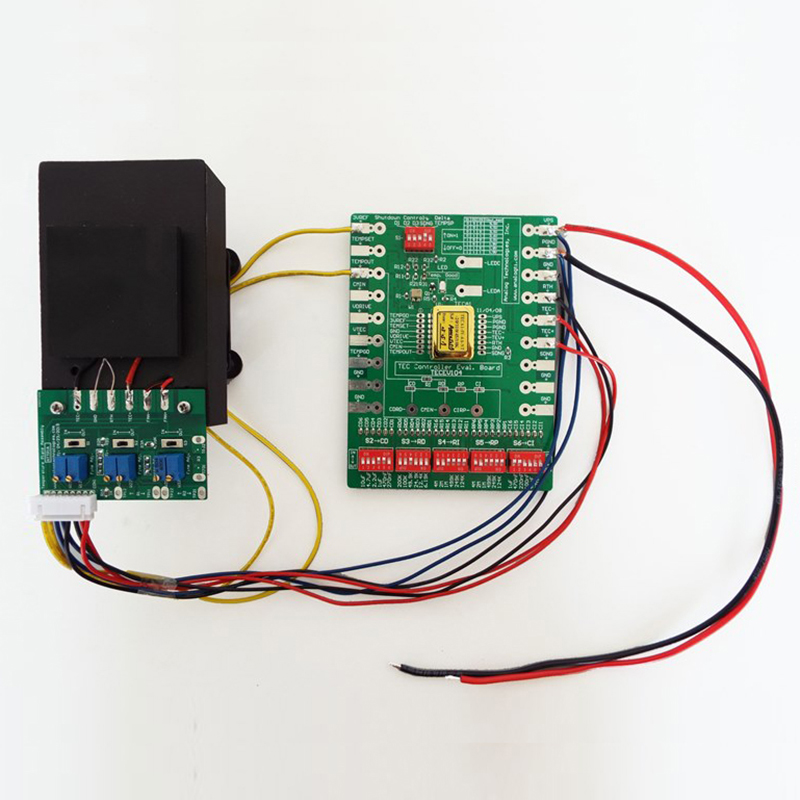
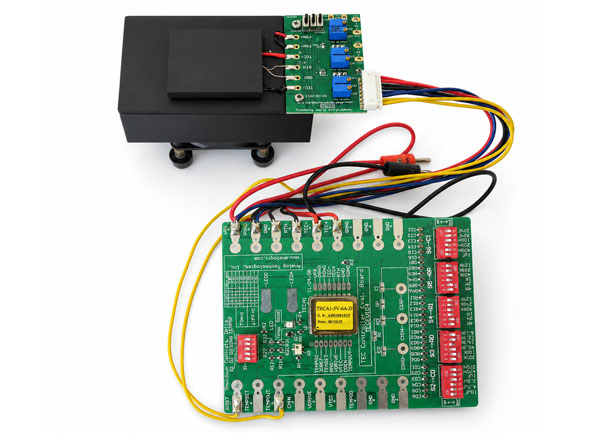
A benchtop temperature-controlled plate for evaluating TEC controllers or regulating a target object, without building a thermal fixture first. Two models: ATTP1A — regulation range −20°C to 110°C, temperature stability 1.8 mV, thermal load capability 15.75 W. Large-signal response 20 s (10°C→20°C); small-signal response 6 s (20°C→23°C). It can also emulate the non-linearity of a laser diode, which makes it useful for exercising a controller against a realistic load. ATTP2 — air-cooled temperature control system with a 7-inch touch screen for setting parameters, for heating, cooling or cyclic heat/cool profiles. The output load is a TEC module, so control is precise, silent, and free of wear, vibration and contamination.

Click to View

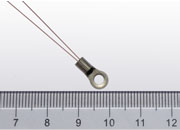
Ultra-small-bore PTFE-type tubing for routing thermocouple and sensor wiring through hot, chemically aggressive or high-voltage zones. Low coefficient of friction, excellent dielectric insulation, corrosion resistance and light weight compared with tubing in other materials. ATTB30B and ATTB32B: continuous operating range −234°C to 260°C, flame rating UL 94 V-0. Typical uses include chemical processing, electronics, aerospace and aviation, and as sleeving for thermistor leads inside TEC assemblies where the wire must survive the hot-side temperature.

Part Number Datasheet With
Pricelist
Buy Now
ATTB30B Ultra Small High Temperature Plastic Tubing buy now buy now
ATTB32B Ultra Small High Temperature Plastic Tubing buy now buy now

Click to View

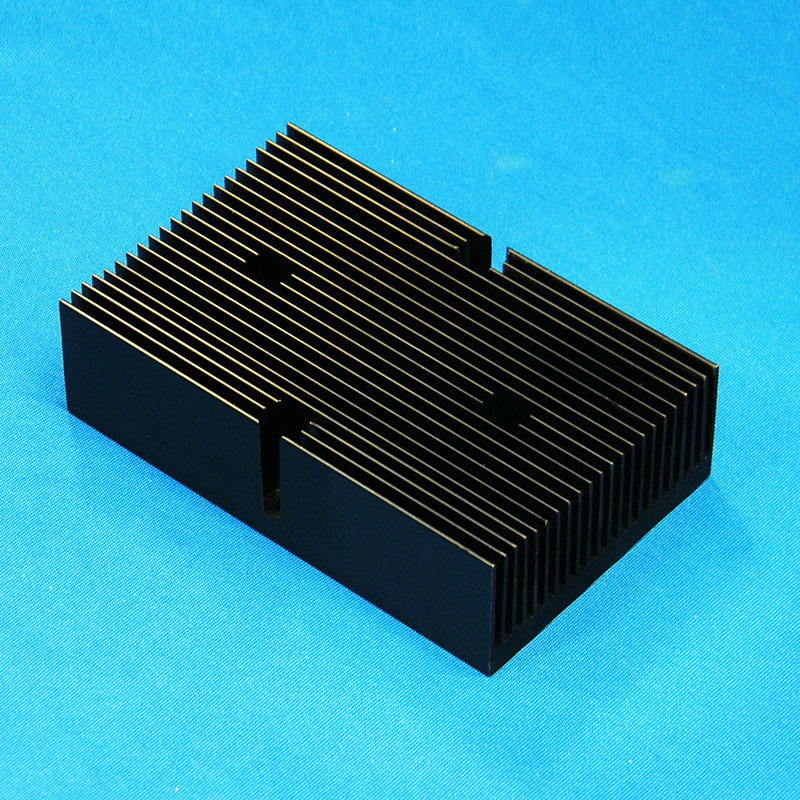
Black-anodized aluminium heat sinks for the hot side of a thermoelectric assembly. The anodised surface increases emissivity and resists corrosion; the extended fin area transfers heat into the surrounding air. ATHS-1/2/105/66/30A — plain baseplate, no mounting holes. ATHS-1/2/105/66/30H4 — same profile with 4 mounting holes for direct TEC/module attachment. Sizing note: the hot side of a TEC must dissipate the cooling power plus the electrical input power, so a heat sink chosen only against the cooling load will run undersized. Pair with thermal conductive material to eliminate the air gap at the interface.

Part Number Datasheet Buy Now
ATHS-1/2/105/66/30A Heat Sink buy now buy now
ATHS-1/2/105/66/30H4 Heat Sink buy now buy now

Click to View

Thermal interface materials that remove the microscopic air gap between a TEC, module or power device and its heat sink — air is a thermal insulator, so an unfilled interface can dominate the entire thermal path. Two types are offered: thermal conductive pads and thermal conductive epoxy encapsulants. ATCR1R5 pad: thermal conductivity 1.5 W/m·K. Pads are re-workable and suit assemblies that may need to be opened again; epoxy encapsulants form a permanent bond and are used where mechanical retention is also required.

Part Number In stock Buy Now
ATCR1R5 388 buy now buy now
RELATED PRODUCTS: